Sustainability report
A practical approach to heat reuse and lower-waste operations.
Dough To Dust was built around a simple idea: when a facility already produces significant heat, careful scheduling can reduce redundant energy use and make the whole operation more efficient.
Our green promise
Making better use of heat that is already being generated.
Cremation generates substantial thermal momentum. In a less imaginative facility, that energy drifts away into the indifferent sky. At Dough To Dust, we ask a more responsible question: has this heat been given every reasonable chance to support dinner?
Our dual-purpose model is built around resource conservation, careful scheduling, and the bold refusal to preheat twice when once has already become a matter of record. Pizza preparation windows are arranged around existing oven cycles to reduce unnecessary warm-up time.
Circular hearth economy
One thermal platform, two carefully separated workflows.
Environmental practices
Lower waste, careful routing, and clear labeling.
Thermal Cascading
We sequence non-overlapping service windows to capture residual oven heat for food-safe baking operations after appropriate cleaning, cooling, and checklist rituals have been completed.
Box & Urn Discipline
Recyclable pizza boxes, minimal packaging, reusable intake bins, and a strict policy against placing any two things with very different emotional meanings on the same cart.
Quiet Miles
Delivery routes are clustered with appointment windows to reduce trips. The vans are discreet, fuel-conscious, and assigned to routes designed to reduce unnecessary mileage.
Respectful Sourcing
Local flour, seasonal toppings, and portion planning help reduce waste. Unsold dough becomes staff meal, croutons, or a lesson in demand forecasting.
No Idle Preheat
Our oven is never warmed casually. If it is in use, it is assigned to a scheduled service window with documented operating requirements.
Digital First
Receipts, remembrance drafts, menus, and scheduling notes are digital whenever possible. Some signatures remain on paper where official records require them.
Why dual purpose matters
Refurbished equipment means fewer new materials and fewer redundant systems.
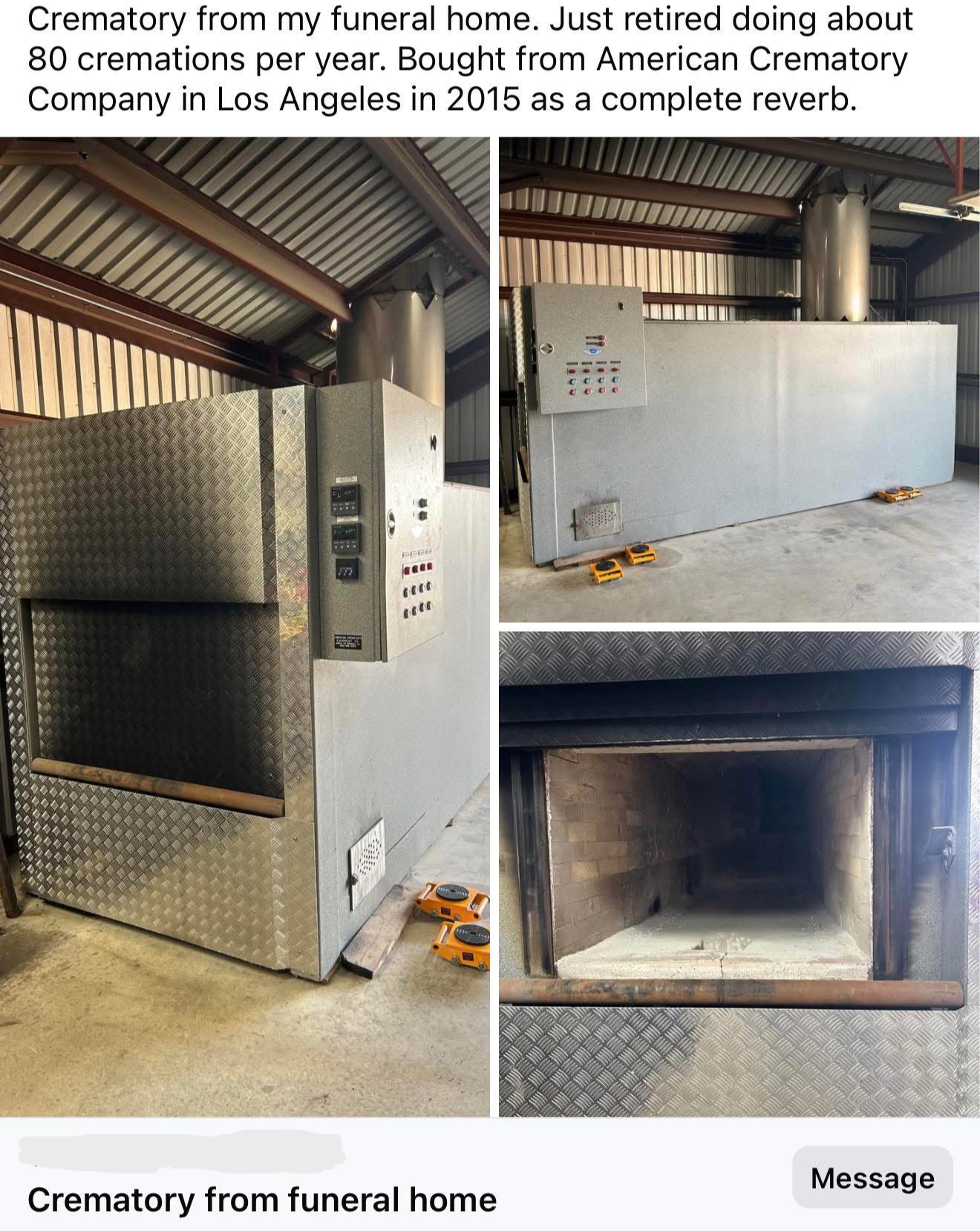
Manufacturing heavy equipment requires steel, transport, installation, and the kind of crate that becomes a permanent feature behind somebody's garage. By refurbishing an existing oven, we extended useful life, avoided a duplicate bake system, and reduced the number of machines standing around waiting to become scrap.
The result is a compact operation with fewer redundant systems, documented separation between services, and a stronger focus on resource efficiency.
View Environmental Practices ReportGreen ordering